Why is Padel the world’s fastest growing Racquet Sport?
Padel Mania. Why is Padel the world’s fastest growing racquet sport?
According to the governing body, the International Padel Federation (FIP), padel is now played by around 25 million people across the globe, with the game enormously popular at a grassroots and professional level in countries
Padel is a racket-based ball sport that could be described as a mixture of squash and tennis. It is played within an enclosed space like squash but shares similarities with tennis.
So the game is played with a net in the middle, like tennis, and the court also looks very similar. Like tennis, players must pass a ball over the net into an opponent's side by hitting it with their racket. However, in Padel, the walls/fence of the enclosed court are firmly part of the sport's gameplay. Players are allowed to hit a ball after it bounces off a wall/fence to keep the ball in play.
Padel is most commonly played by four people in a game of doubles, though it can also be played individually. Playing as pairs hark back to the game's social origins.
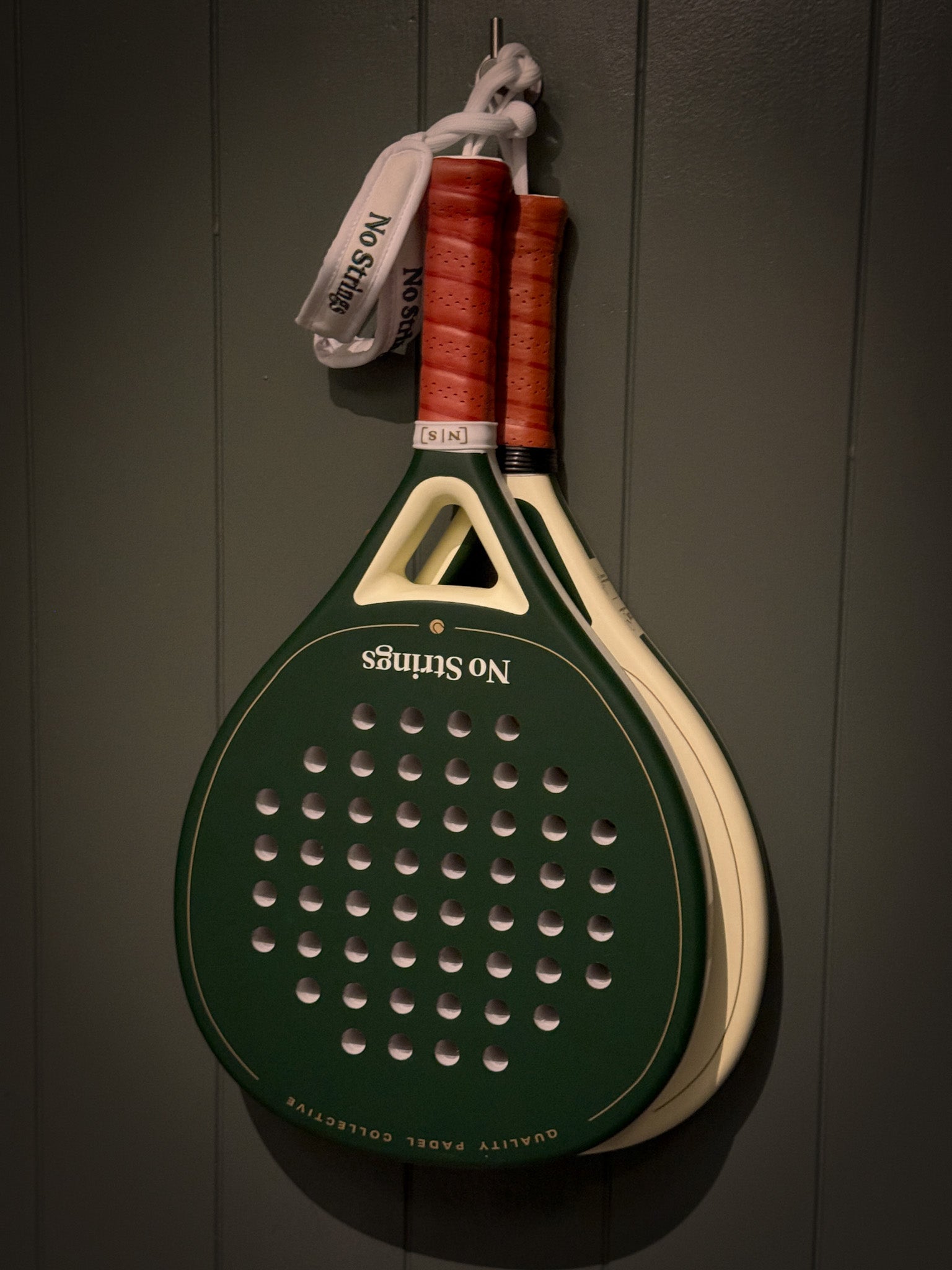
We are thrilled to have No Strings Padel on Avenue Athletica, whose inspiration draws heavily from vintage tennis aesthetics, consciously bypassing flashy branding and empty marketing gimmicks.
Instead, No Strings Padel focus on getting the fundamentals right. By blending timeless, understated style with modern engineering and top-tier specs, the Clubhouse Classic padel racquet feels as good as it looks.
Available now on Avenue Athletica.
Move with Purpose
According to the governing body, the International Padel Federation (FIP), padel is now played by around 25 million people across the globe, with the game enormously popular at a grassroots and professional level in countries
Padel is a racket-based ball sport that could be described as a mixture of squash and tennis. It is played within an enclosed space like squash but shares similarities with tennis.
So the game is played with a net in the middle, like tennis, and the court also looks very similar. Like tennis, players must pass a ball over the net into an opponent's side by hitting it with their racket. However, in Padel, the walls/fence of the enclosed court are firmly part of the sport's gameplay. Players are allowed to hit a ball after it bounces off a wall/fence to keep the ball in play.
Padel is most commonly played by four people in a game of doubles, though it can also be played individually. Playing as pairs hark back to the game's social origins.
We are thrilled to have No Strings Padel on Avenue Athletica, whose inspiration draws heavily from vintage tennis aesthetics, consciously bypassing flashy branding and empty marketing gimmicks.
Instead, No Strings Padel focus on getting the fundamentals right. By blending timeless, understated style with modern engineering and top-tier specs, the Clubhouse Classic padel racquet feels as good as it looks.
Available now on Avenue Athletica.
Move with Purpose

Written by Faye Mantis

,%20padel%20is%20now%20played%20by%20around%2025%20million%20people%20across...)